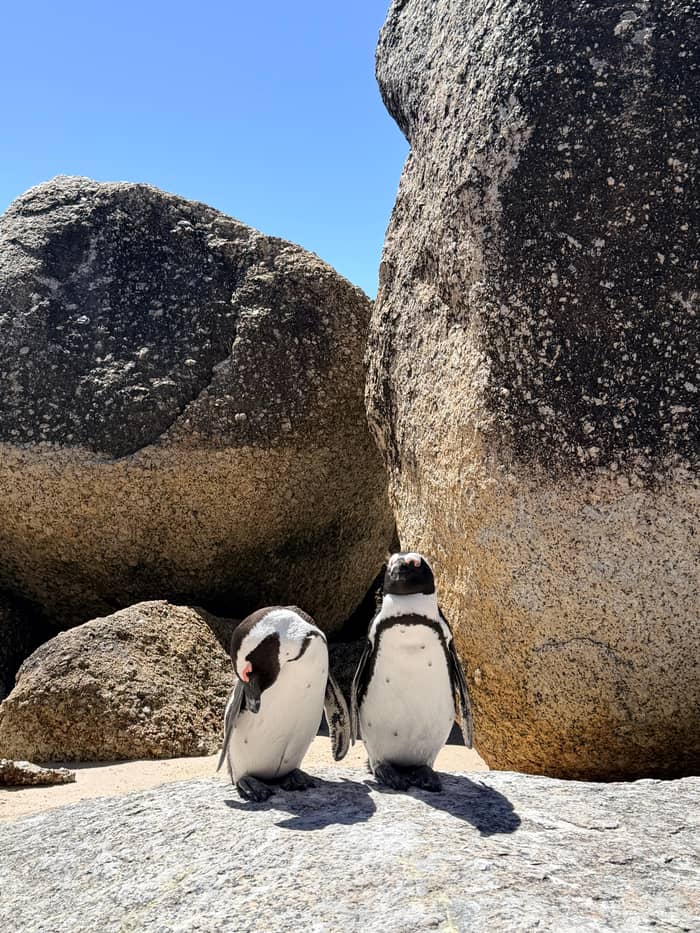
Tour it
SANCCOB hospital
Cape Town seabird centre
- Where22 Pentz Drive, Table View
- Hours09h00 to 15h00 daily
- SizeLargest of its kind in southern Africa
Guides
Language
Currency
View availability$51 and up · free cancelTap-to-check list
Answer in brief
The African penguin is Critically Endangered, and SANCCOB, SANParks and the City of Cape Town work to rescue birds and protect the Boulders colony.
Conservation facts
Your list · 8 items
Tap to check items off; your progress is remembered on this device.
0 / 8 ready
You are ready. Only the booking is left: your date and your pickup hotel.
Book a spotA well-visited colony sits inside a species in trouble. This page explains how the Boulders birds got here, what rescuers and the courts are doing, and how to visit well.
Editorial team, bouldersbeachpenguins.click · Updated November 7, 2026 · Allow 6 min
The essentials
The Boulders colony is young by seabird standards. South African Tourism dates it to 1983, when a pair was spotted on Foxy Beach, and says the birds came to False Bay from Dyer Island.6,7 At the time False Bay was closed to commercial fishing, and the newcomers found food and nesting sites there.7 The SANParks brochure tells the story a year earlier, saying the colony grew from just 2 breeding pairs in 1982.8 The sources differ by a year, so treat either date as the start of the story and not as an exact line.
Numbers today also depend on who you ask. The same brochure says the colony reached about 2 200 birds in recent years, while Cape Town Tourism estimates the population between 2,000 and 3,000 birds.8,9 Neither counts the other Simon's Town beaches the same way, and a count made in the breeding season will not match one made at the moult. What matters for a visitor is that the colony is large enough to watch every day and small enough to need care.
The colony also sits in an unusual setting. SANParks describes Boulders as sitting in the midst of a residential area while remaining one of the few sites where the endangered bird can be seen at close range.10 The national management plan notes that the urban edge and human presence at Simon's Town may deter land predators such as caracal and leopard.11 That is an odd upside of town life, and it comes with costs the later sections describe. The African penguin colony at Boulders Beach is one small part of the wider species story that this page follows.
The numbers
| Measure | Figure | Source |
|---|---|---|
| Breeding pairs, 2018 | 15,1872 | SANCCOB |
| Breeding pairs, end of 2023 | 8,750 estimated2 | SANCCOB |
| Population share lost | 97%16 | SANCCOB |
| Share held by the protected colonies | 76%20 | SANCCOB |
| Jobs tied to Boulders | 88521 | National management plan |
| Visitors a year | Over 60 00022 | South African Tourism |
Figures are the sources' own; they use different years and methods, so compare trends and not single digits.
The Boulders birds are an exception inside a falling total. BirdLife South Africa says the African penguin was uplisted to globally Critically Endangered in October 2024, and puts the South African population at approximately 17 500 mature individuals, or 8750 breeding pairs, in 2023.13,15 SANCCOB says the bird has already lost 97% of its population.16 These are not figures about one beach. They describe a species that breeds mainly on islands along the southern African coast, and the mainland colonies matter because people can reach them.
SANCCOB reports the fall in pairs plainly: from 15,187 in 2018 to an estimated 8,750 at the end of 2023.2 CapeNature lists the pressures behind it as reduced food around breeding colonies, competition with seals, predators and oil spills.17 The same agency notes that egg collecting and guano removal were major threats in the past and are no longer allowed.
The law has caught up with the status. CapeNature says the African penguin is listed under the Threatened or Protected Species Regulations of the National Biodiversity Act, which raises its protection to a national level.18 Very little human contact is allowed inside most breeding colonies.19 Boulders is an exception in that a public walkway runs beside the nests, and that arrangement works only because of the boardwalks and the rules that go with them.
How we got here
The start
South African Tourism dates the colony to 1983, with birds from Dyer Island.6,7
Growth
SANParks says it grew from 2 breeding pairs in 1982 to about 2 200.8
Hospital
The Cape Town hospital reopened to the public in November 2018.12
Decline
Breeding pairs fell from 15,187 in 2018 to an estimated 8,750 at the end of 2023.2
Listing
The global uplisting dates to October 2024.13
Court
A High Court order set closures for 10 years.14
CapeNature says African penguins feed mostly in the open sea on pilchards and anchovies and small squid.26 SANCCOB says commercial purse-seine fishing competes with the penguins for sardines and anchovies, their main food, leaving them hungry and making it harder to breed.3 Those are claims from a conservation charity that is also a party to a court case, so read them as one side of a debate, though CapeNature's own list of pressures agrees on reduced food.
The practical answer so far has been fishing closures. SANCCOB says the fishery no-take zones surround six African penguin colonies that hold 76% of the global population.20 In a later court order, a Pretoria High Court order set closures around key colonies for a period of 10 years, and the order puts them in place year-round, including the full fishing season.14,27 The aim is to keep enough fish near the colonies for adults to feed themselves and their chicks.
Why does this matter at a beach? A Boulders penguin that cannot find enough food cannot fatten up for the moult or feed a chick. The management plan says a fasting bird loses about 40% of its pre-moult mass during the moult.28 When the sea is short of fish, the margin disappears, and the sight of a thin bird standing alone on the sand has more to do with the ocean than with the beach.
Match your help
Pick the line that sounds like you, and the answer sits beside it
If I only want to behave well on the beach
Stay behind the barriers
Visitors have been recorded leaning over or crossing barriers.23
If I want to see rescue work
Tour the SANCCOB hospital
Tours run daily between 09h00 and 15h00.24
If I am driving myself
Watch the car park
Penguins have been killed by cars at parking lots near the colonies.25
If I want to understand the threat
Read about food and fishing closures
The no-take zones surround six colonies holding 76% of the population.20
If I think about my pictures
Keep your distance
Very little human contact is allowed in most colonies.19
Ways to engage
Tour it
Cape Town seabird centre
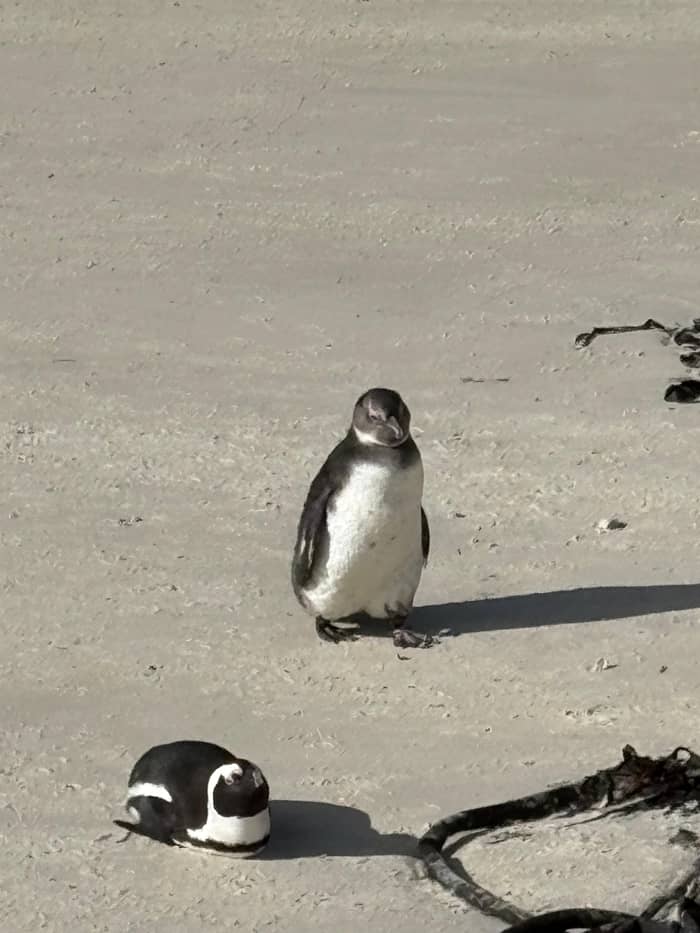
Visit it
Watch from the planks
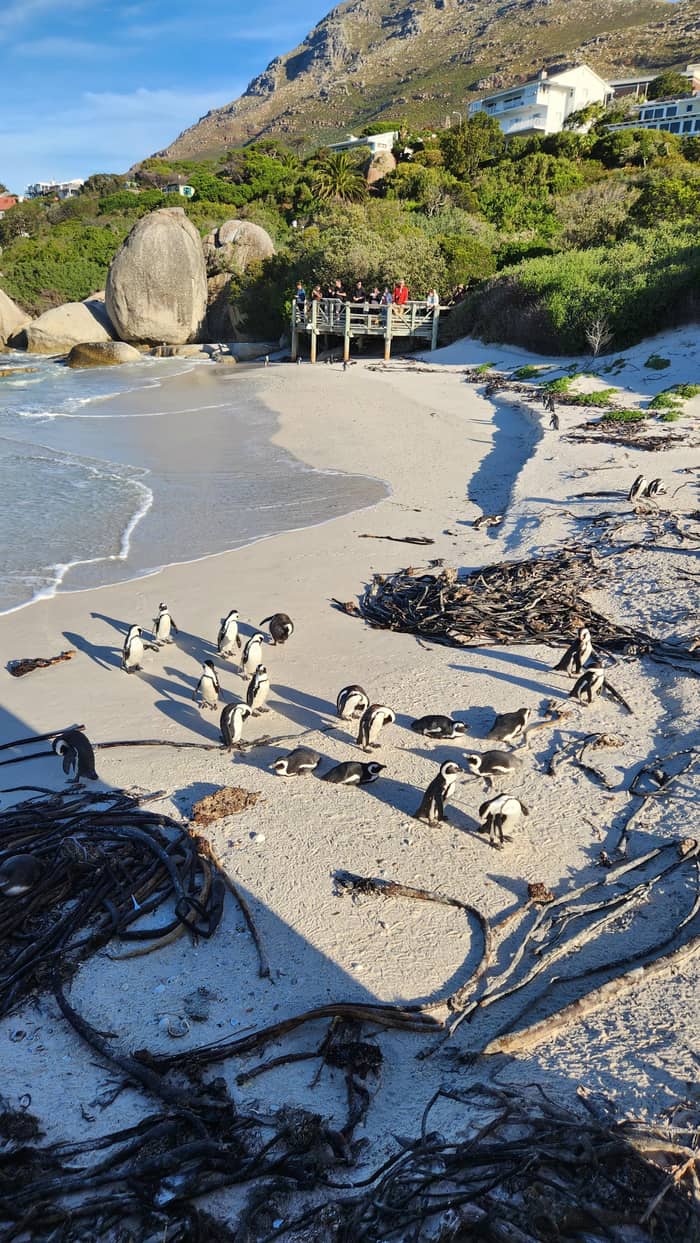
Support it
Rescue on the ground
SANCCOB is the charity behind most of the rescue work for penguins in trouble on this coast. It provides a 24/7 rescue service for sick and injured seabirds and abandoned seabird chicks, and treats an average of 2,500 injured, sick and oiled seabirds each year.4,32 Its Cape Town centre is at 22 Pentz Drive, Table View.33 The Cape Town seabird hospital reopened to the public in November 2018 and is the largest facility of its kind in southern Africa.12
Chick season is its busiest stretch. SANCCOB says October to January is chick season, when abandoned African penguin chicks arrive at its centres.34 Adults fatten up to sustain 3 to 4 weeks of moulting, and chicks that have not fledged can starve while their parents are ashore.35 The charity's chick bolstering project had released almost 5000 hand-reared chicks since 2006.36 A Boulders chick that is abandoned in this way is exactly the kind of bird that ends up in the hospital.
Rangers link the colony to the hospital. SANCCOB supports 7 Penguin and Seabird Rangers at 4 seabird colonies, and Simon's Town is one of them.37 They rescue injured, oiled or abandoned seabirds and eggs and collect data used for research.29 The Boulders section is co-managed by SANParks and the City of Cape Town, so a ranger works within a joint system and not alone.38 If you see a bird in obvious trouble, tell a ranger or the visitor centre instead of picking it up.
Tourism pays for part of this. South African Tourism says over 60 000 visitors a year come to Simon's Town to watch and photograph the Boulders penguins, and that the money helps conservation efforts through SANParks.22 The management plan calls Boulders one of the world's most-visited penguin colonies, with 885 jobs associated with it.21 The money and the jobs show why a healthy colony matters to the neighborhood around it.
Visitors can also cause harm. South African Tourism notes that cars, people and competition for breeding sites have pushed penguins to nest in unsafe places.39 The plan records visitors leaning over or crossing barriers, trying to touch birds, and penguins killed by cars in parking lots close to the colonies.23,25 The artificial nesting boxes seen from the walkways were introduced to reduce the loss of chicks.40 Respect for those boxes and barriers is a simple way for a visitor to help.
If you want to go further, visit the hospital. SANCCOB runs tours of its seabird hospital daily at Cape Town and Gqeberha between 09h00 and 15h00.24 You can see rehabilitation at close range, and the visit adds context to the sight of a healthy colony at the beach. On a day tour, remember that the Boulders stop lasts 1 hour, so a hospital visit needs a separate day.
Video
SANCCOB on YouTube · Playback files load only once you tap play.
Very little human contact is allowed within the majority of the breeding colonies.
FAQ
It runs a 24/7 rescue service for sick and injured seabirds and abandoned chicks.4
Tours of the seabird hospital run daily between 09h00 and 15h00 at Cape Town and Gqeberha.24
SANCCOB says October to January is chick season, when abandoned chicks arrive at its centres.34
The national management plan describes co-management by SANParks and the City of Cape Town.38
Sources
Related guides
Questions about the Boulders day? A real person answers here.